The Role of Glass Clarity & Optical Quality in Driving Safety
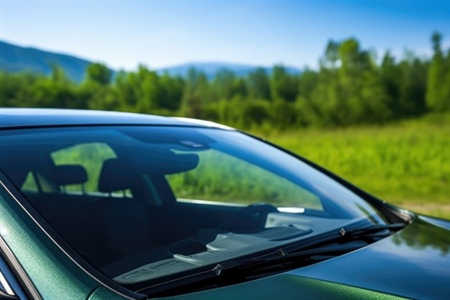
Clear visibility is essential to safe driving. Even the slightest optical imperfection in auto glass can alter how drivers perceive distance, light, and motion.
High-quality glass does more than keep debris out—it ensures undistorted vision under all lighting conditions. At Glasswerks, technicians maintain strict optical accuracy to preserve the visibility that drivers depend on every day.
This article explains how glass clarity influences safety, exploring distortion effects, OEM optical standards, coating performance, light refraction causes, and professional testing methods that confirm optical precision before installation.
Small Distortions in Glass Impact Driver Visibility
Small distortions in a windshield may seem harmless but can subtly alter visual focus and depth perception. Irregular curvature, uneven lamination, or manufacturing stress can bend light in unpredictable ways, producing areas of magnification or waviness.
These inconsistencies can make straight lines appear warped, especially along the edges of the viewing field, which distracts the driver and affects reaction time.
The National Highway Traffic Safety Administration (NHTSA) has documented that optical irregularities can delay visual recognition of hazards, particularly in low-contrast environments such as night driving or rain.
Even a few degrees of curvature variation can affect how light refracts across the surface, leading to eye strain or misjudged distances.
Proper auto glass replacement ensures the windshield maintains uniform curvature and lamination integrity. Professional installation also prevents tension points that could cause subtle distortions over time, keeping the driver’s field of vision clear and consistent.
The Optical Standards OEM Glass Manufacturers Follow
OEM glass must comply with Federal Motor Vehicle Safety Standard (FMVSS) No. 205 and European ECE R43 optical clarity requirements.
These regulations define maximum permissible distortion, haze, and transmittance deviation across various zones of the windshield. Manufacturers must achieve uniform optical transmission and eliminate birefringence caused by residual stress during lamination.
Each windshield is tested using optical measurement grids and polarized light systems that identify distortions at micrometer resolution.
This ensures that objects appear at true distances, and that the glass refracts light uniformly without color separation or image doubling.
By maintaining strict dimensional tolerances and curvature control, OEM glass provides consistent optical quality and reduces visual fatigue. Manufacturers use precision molds, controlled cooling cycles, and autoclave lamination to meet these clarity standards consistently.
Tinting or UV Coating Influences Clarity
Tinting and UV coatings protect drivers from glare, eye strain, and solar heat, but these enhancements must not reduce transparency or color neutrality.
High-quality coatings filter harmful wavelengths—especially UV and infrared—while maintaining clear visible light transmission. Poorly applied or uneven tint films can scatter light and distort colors, compromising clarity under bright or low-light conditions.
Factory-applied coatings are precision-engineered to preserve 70–75% visible light transmittance while blocking up to 99% of UV radiation. The coating’s refractive index and thickness are carefully balanced to avoid creating iridescent or rainbow-like reflections, which can distract drivers using polarized sunglasses.
When selecting glass with tint or coatings, professional installers verify compliance with state regulations and ensure optical neutrality. Properly engineered coatings enhance comfort without interfering with true color recognition or contrast sensitivity.
The Causes of Glare & Light Refraction Issues in Replacements
Glare and light refraction problems in replacement windshields usually result from surface unevenness, contamination, or curvature mismatch with the vehicle’s frame.
Even minor deviations can change the angle of incident light, producing ghost images, halos, or double reflections around bright objects at night.
Improper installation can tilt the glass slightly off its designed axis, altering how light passes through the laminate layers.
Adhesive over-application or uneven bonding pressure can also distort the optical path. Over time, micro-scratches from wipers or road debris increase light scattering, further amplifying glare.
Glasswerks uses optical inspection techniques to identify refraction and glare risks before installation. By aligning glass precisely with the frame and applying adhesives uniformly, technicians maintain the factory optical geometry that keeps visibility sharp under all lighting conditions.
How Technicians Measure Optical Accuracy
Technicians evaluate optical performance through a combination of laboratory and field tests. These include laser interferometry, haze measurement, and refractive index mapping.
Interferometers project coherent light through the glass to detect even microscopic distortions, while haze meters quantify light scattering within the laminated structure.
Optical alignment charts help technicians verify that images appear in true position through the glass. Measurements follow ASTM D1003 standards for haze and FMVSS optical tolerances. When irregularities are found, the glass is rejected or reprocessed to meet clarity requirements.
At Glasswerks, each windshield undergoes precision inspection under controlled lighting conditions. This ensures every replacement meets OEM optical accuracy, providing drivers with clear, undistorted visibility and improved safety performance.
Glasswerks: Delivering Precision Optical Performance
Located in St. Cloud, MN, Glasswerks combines advanced inspection methods with AGSC-certified installation practices. Each replacement is tested for optical uniformity and clarity before delivery. Customers can reach our team at 320-203-7777 or through the contact us page.
Every installation meets OEM optical and safety standards, maintaining both visibility and structural strength. Glasswerks ensures that every windshield performs flawlessly under real-world driving conditions, keeping Minnesota drivers safe and focused on the road ahead.